
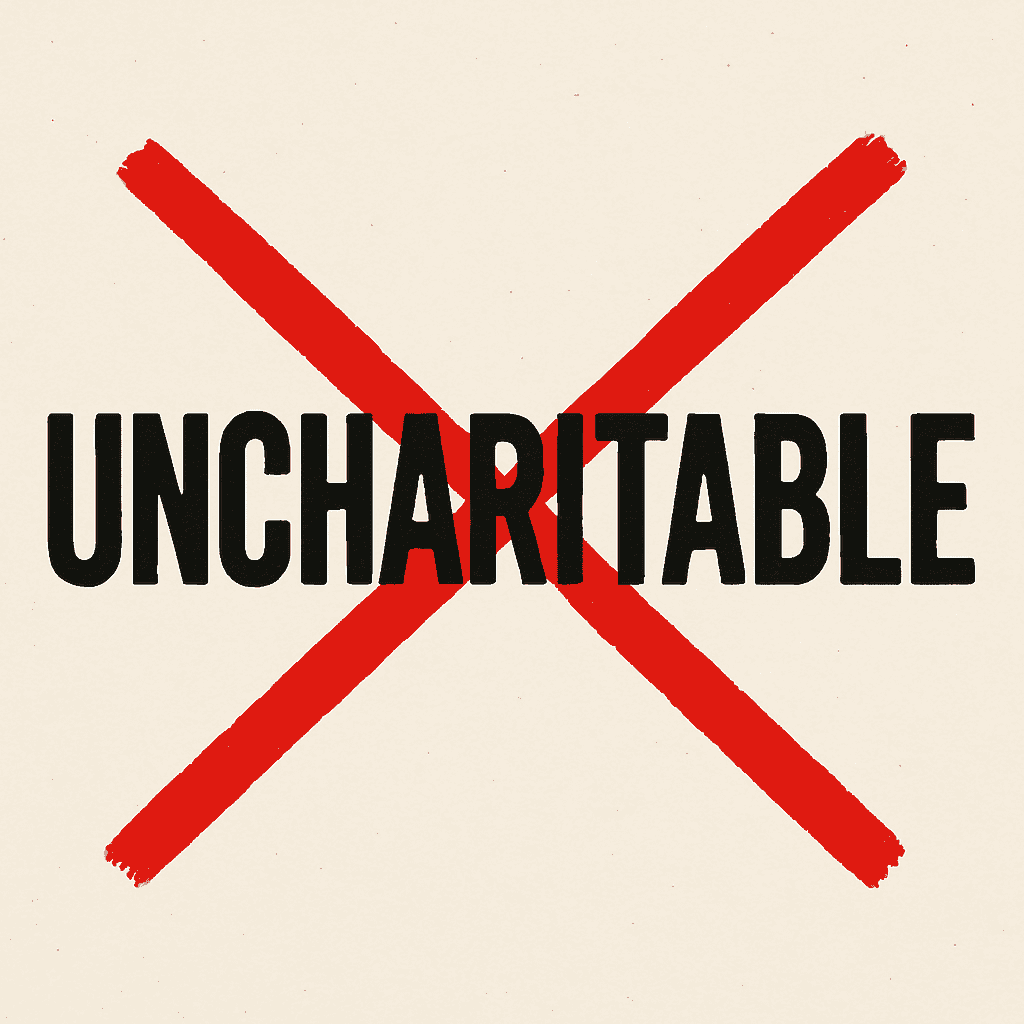
I was told the documentary Uncharitable would change my philanthropic approach, and well, it didn’t. In fact, the rhetoric flying passionately from the screen and the vigorous nods from the audience left me feeling flat and reinforced my thinking on the charity sector. And today, as I sit in a street side café among the smoky headiness and spicy heat of the Cannggu hills of Bali, it is perhaps the tyranny of distance that allows me the comfort to put into words what I have believed for a few years.
And that is – the charity sector I have embraced, and love deeply can use passion to mask ego and therefore espouse a ‘we know best’ methodology that can be naive and protectionary. Us well intentioned human beings often come from a personal experience of loss and our dark sides are just as powerful as the light we shine so brightly via our good deeds. We can be quickly blinded by the light.
As a collective movement, we allow outside forces to direct us and the fact that we cannot decide what to call ourselves proves we do not know best. One year we are a charity and the next we are a nonprofit and now we are a for purpose. I know I am confused – just imagine how confused our donors are, and now we are telling them to finance our overheads.
As John McEnroe famously shouted to another bemused and wary umpire; ‘You cannot be serious!’
So, I ask my fellow charity workers to step away from the noise created by the resounding back slapping and trophy clinking of another annual conference and quietly ponder how arrogant the Uncharitable message sounds to an emotionally honest listener.
Self-righteous success does not award us the right to demand financial support from philanthropists who are giving hard won currency to those without a voice. Remember, we represent the clients and causes we support – not the structure that employs us. We are merely a conduit, not a necessity, and there is a vast difference in the funding approach so do not try to lull me with impact reports and strategy charts. The numbers and acronyms tumble as noisily as the discourse.
When the spirit is purely distilled Uncharitable argues that the charity sector is hamstrung by unrealistic expectations and double standards compared to the for-profit world. The movie contends that the donor’s obsession with overhead costs and reluctance to allow charities to take financial risks stifles innovation, limits growth, and ultimately hinders the sector’s ability to solve big societal problems. For example, Dan Pallotta suggests that if charities were allowed to spend more on marketing, compensation, and infrastructure, they could scale their impact, much like businesses do.
To argue against the Pallotta observations, I have set down the following:
- Accountability in Resource Allocation: Charities exist to serve the public good, mostly funded by donations from individuals and government grants. Transparency and restraint in overhead spending ensure that funds are directed toward programs, not administrative bloat or excessive executive salaries. The call for greater risk and investment in overhead could detract from the direct mission of these organizations, creating a slippery slope toward inefficiency.
- Ethical Boundaries: Uncharitable advocates for charities to adopt business-like strategies but there is a fundamental difference between the two. Businesses aim for profit; charities are mission-driven. This model blurs the line, raising ethical concerns about how much of a charity’s resources should be spent on self-promotion or executive compensation, rather than direct aid. This could erode public trust, with donors feeling their contributions aren’t reaching those in need. There is another unpalatable point that charity executives do not like to talk about – the majority of charities do not have robust balance sheets, not because of the use of donations nor the lack of talent and exposure but the fact that the social sector operates among disadvantage and that permeates through the ecology.
- Market Dynamics Don’t Always Apply to Social Problems: Charities are often addressing deep-rooted societal issues that don’t respond to market solutions. Unlike businesses, charities can’t always “scale” solutions in the same way. Uncharitable’s focus on growth assumes that bigger budgets will inherently lead to more social impact, but some issues, such as systemic poverty or inequality, require sustained, localized efforts rather than high-growth models. Bigger does not mean better in the charity sector it mostly means bureaucratic.
- Potential for Donor Alienation: Finally, the model places great emphasis on overhead costs, which may cause alienation among donors who prefer to see their money being used directly for the cause they support. By increasing spending on marketing or salaries, charities risk distancing themselves from the grassroots supporters who value frugality and direct action, potentially weakening the donor base they rely on. What many lifetime fundraisers do not understand is that high nett worth donors come from success and success creates money. When money is used incorrectly or strays from mission it weeps to the dark side creating eddies of waste and ego. I am a big supporter of donors giving unrestricted funds, but that donor trust takes consistency, talent, employee stability and years of humble effort on the part of the fundraiser.
In summary, while Uncharitable’s vision of a more entrepreneurial nonprofit sector is compelling, it overlooks the unique ethical responsibilities of charities, the complexities of solving social problems, and the importance of trust in their operations. The charity sector needs to understand its peculiar foibles and own the weeds growing out of the cracks in its own backyard before it asks mission driven philanthropists to fund business as usual. Face facts – the only reason an investor in the business world would fund business as usual was if they had a share in the profit and control of the balance sheet.