

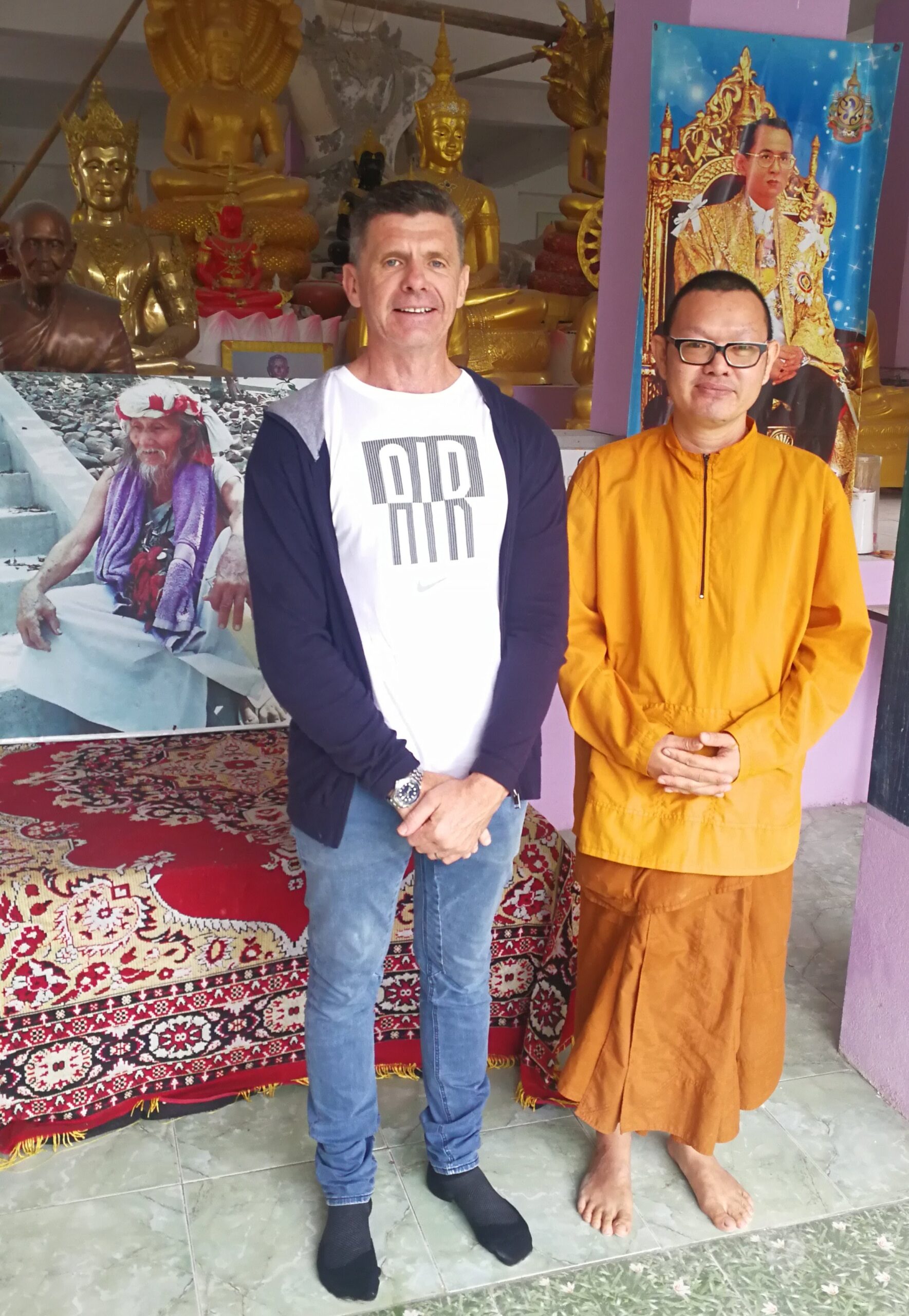
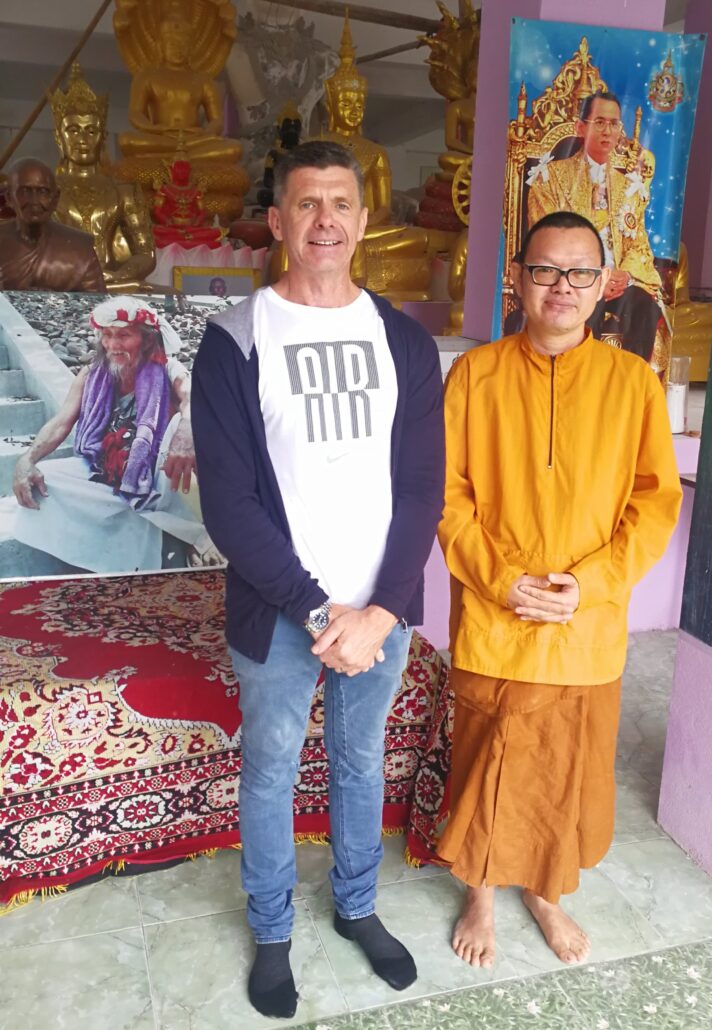
- Author with the Head Monk of the Buddhist forest retreat on Kings Mountain, south west of Chiang Mai. ↩︎
In an age where influence is currency, the interplay of charisma and merit—ancient forces of attraction and legitimacy—has taken on new forms. From the jungle temples of Northern Thailand to the boardrooms of Australian charities, and through the quiet authority of Yoshi in my novel Pilgrim, to the heartfelt work of leaders navigating cultural survival and community service, these forces ripple through acts of giving, acts of service, and the stories we tell about virtue.
Khruba, those revered monks of the Lanna tradition, offer a compelling window into how spiritual charisma has long functioned as a magnet for both reverence and resource. Their status as ton bun—people of merit—imbues them with a kind of spiritual magnetism. To donate to a Khruba, to walk in their orbit, is to partake in that merit, to polish one’s karma and offer a path through suffering toward peace. The Khruba is more than a monk; he is a living conduit for blessing, protection, and prosperity.
In my novel Pilgrim, (https://silkwormbooks.com/products/pilgrim-a-chiang-mai-love-story) the character Yoshi—robed, measured, and quietly enigmatic—embodies a modern echo of this spiritual charisma. Though he speaks little of doctrine, his presence commands stillness. He is not orthodox, yet his magnetism mirrors that of the Khruba: unique, centered, and laced with the promise of transcendence. His difference is his draw.
But charisma, in both religious and secular spheres, is not benign. It has its own economics.
Much like the Khruba, some Australian charity founders often emerge as moral beacons—figures who speak to society’s wounds with both compassion and competence. Their merit is not framed in karmic language but in outcomes, impact reports, and the story of the “good” they generate. Yet, behind the appeal to values and vision lies the subtle pull of prestige. To be associated with a revered leader—spiritual or social—is to feel warmer in their light. This is where merit becomes currency, and charisma, a marketing strategy.
From my experiences working across the charity sector, there is a recurring tension that echoes across borders and belief systems. These charities often operate within a sacred mandate—to honour culture, respond to social need, and carry forward truths that aren’t always legible to bureaucracy. Their merit lies in integrity. And yet, that very merit is vulnerable to dilution when it becomes a commodity to be packaged, branded, and sold to donors.
It’s a delicate dance: honour the community, but make it legible to funders. Stay rooted in purpose, but engage the machinery of modernity—social media campaigns, sponsorship deals, gala nights. There’s a real risk that the essence of service becomes lost in the performance of virtue.
Yoshi’s world illustrates this paradox. He is both grounded and mysterious. His presence draws people in—but does that following change his message? Would the amplification of his image, through digital means, erode the stillness at the heart of his teaching?
The same questions might be asked of many charismatic leaders—secular or spiritual. When charisma is corporatized, and merit is monetized, does the mission serve the people or the prestige?
A Modern Temple Economy
Temples in Thailand, once places of retreat and reflection, now sometimes resemble destinations—spiritual sanctuaries turned photo opportunities. Donors build stupas and plaques, volunteers flock for the selfie-worthy blessing. Charities, too, often become sites of pilgrimage for the well-intentioned, seeking not only to serve but to feel sanctified by association.
Here lies the modern twist: we don’t just give to do good—we give to be seen doing good.
Digital platforms have made this all the more potent. Algorithms reward charisma. Influence scales. Social equity becomes a by-product of visibility. And in this, merit becomes performative.
As this paper suggests, the commodification of charisma—whether in robes or reports—sometimes moves beyond social good into the realm of survival justification. The very tools that help organizations and spiritual leaders survive can also distort the purity of their missions. And yet, paradoxically, these distortions can further legitimize them—drawing more attention, more funding, more acclaim.
This is the charisma trick.
The Fragility of Good Intentions
What Pilgrim, Yoshi, and the main character Daniel’s observations ask us to consider is not just how charisma and merit are used—but why they remain so potent. Is it because we are spiritually hungry? Longing for leaders who transcend bureaucracy? Searching for an image of good we can understand, follow, or be near?
And what happens when that hunger meets capitalism?
Philanthropy and faith share a common vulnerability: both are susceptible to the corruption of purity by power. The rituals of giving, the architecture of merit, and the machinery of charisma can all become tools for something other than transformation. They can become tools of consolidation—of influence, legitimacy, even as it is called in Thailand – soft power.
A Gentle Invitation
None of this is an indictment. Rather, it’s an invitation to gently reflect.
- Can charisma still be authentic in a world that rewards spectacle?
- Can merit still be meaningful when it is monetized?
- Can we distinguish between inspiration and influence, between a calling and a brand?
Perhaps it is here, in this tension, that true service lives—not in the certainty of sainthood or the metrics of impact, but in the quiet commitment to integrity, even when no one is watching.
As Yoshi might say without words: truth doesn’t need to speak loudly to be heard.