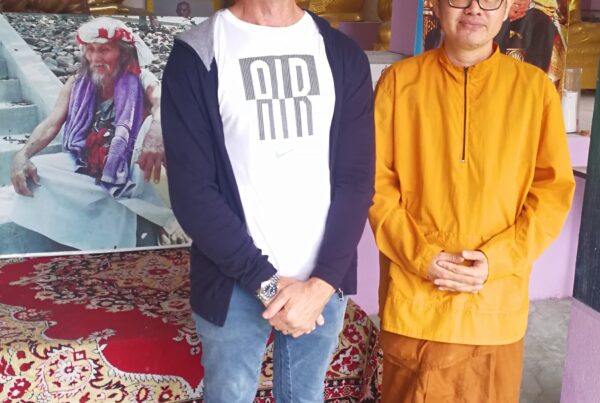

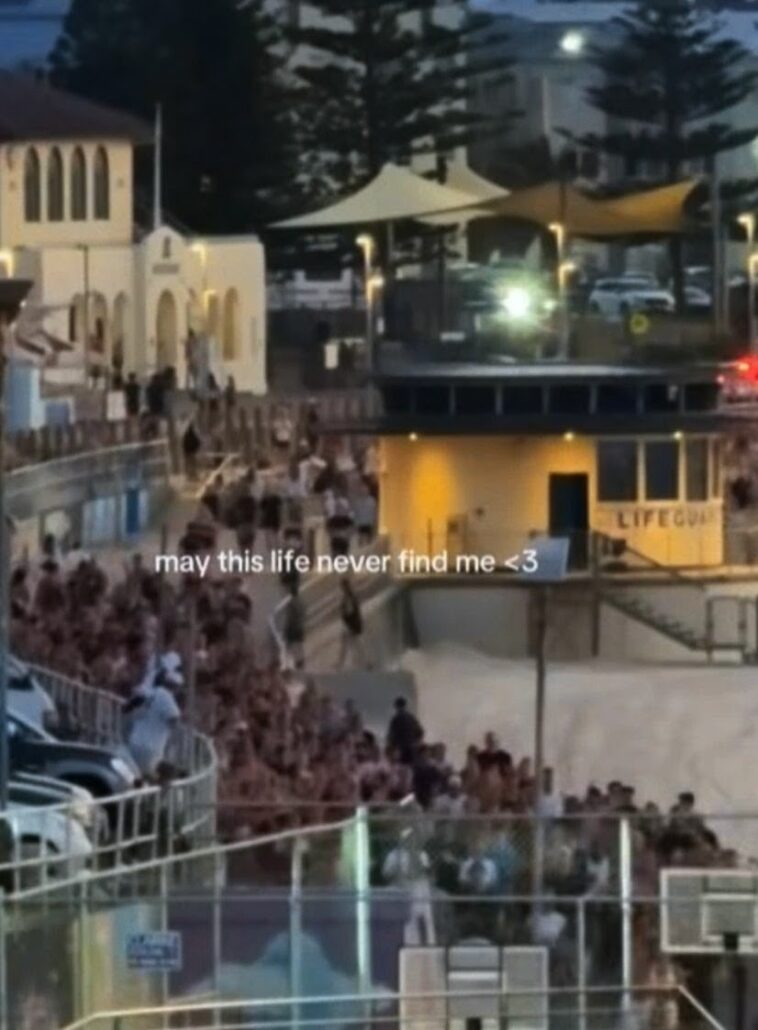
Walk through the lanes of the old city precinct of Chiang Mai early in the morning and life moves to a different rhythm. It is a polar opposite to a Bondi Beach early morning.
Before the coffee machines start humming, food hawkers and motorbikes fill the streets, saffron robed monks walk the alleys collecting alms. Temple bells echo from centuries-old wats. Locals pause, bow, offer food and return quietly to their day. Nothing dramatic happens.
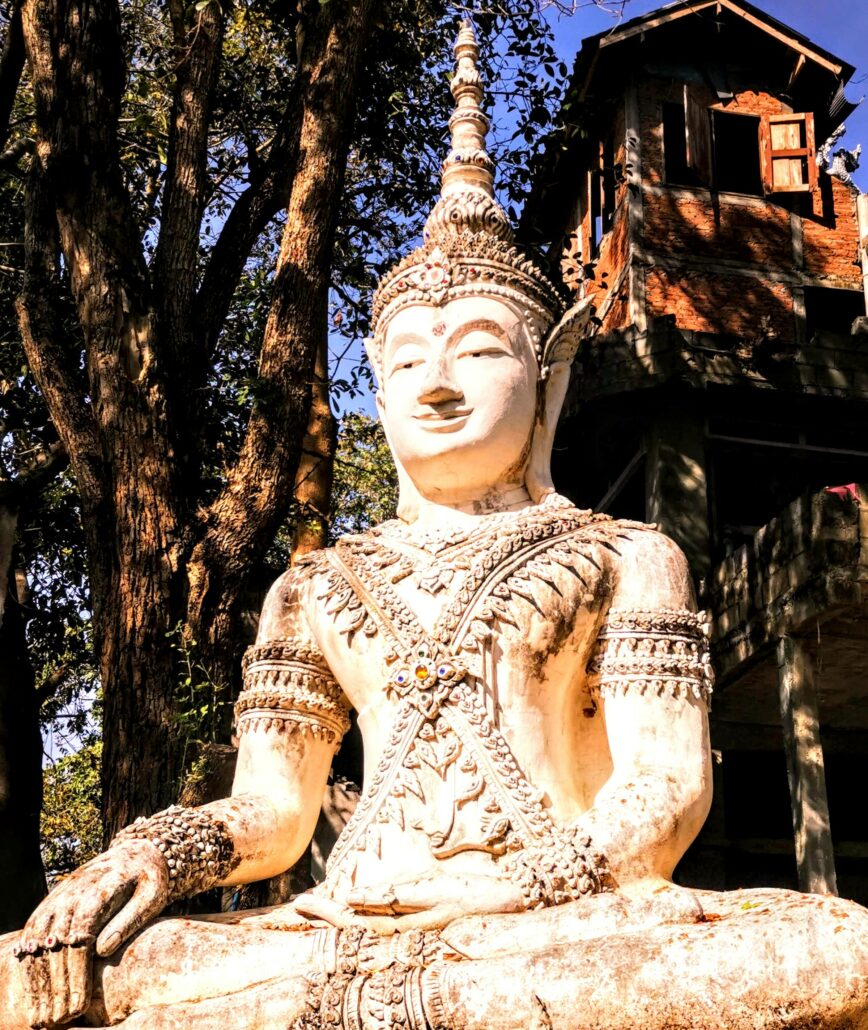
As I have learned from my many trips to Northern Thailand, Buddhist communities do not ask us to abandon the world, nor does it expect its participants to leave our careers, families, ambitions and responsibilities. Instead, it asks a gentle but difficult question:
Can we live fully in the world without being consumed by it?
This question sits at the heart of One Day One Life.
Modern life tells us happiness is ahead in our next promotion, the bigger house, the successful capital raise, the perfect relationship, the superbly aged red wine, the private school for our gorgeous, ‘so capable’ children and that hybrid car that drives itself but really knows my nuanced proclivities. In other words, the moment when everything finally falls into place.
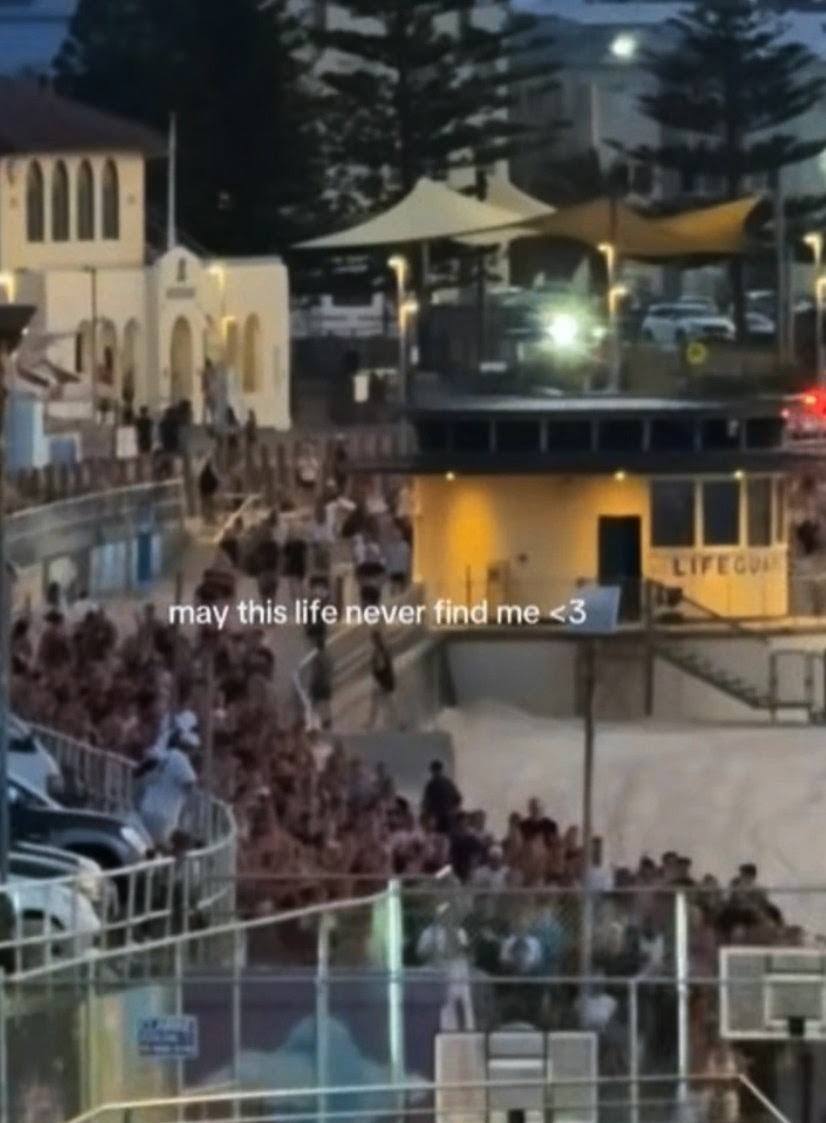
I see it in the new ‘morning economy’ at Bondi Beach. Impossibly fit, beautiful and articulate human beings, chatting, laughing and grooving on the esplanade and surf side cafes, but when the ‘scene’ ends, they tell you to piss off or blatantly ignore you once the disengaged masses hit Campbell Parade. I’m not judging the gathering; I’m advising that the bliss moment should last beyond the ‘scene.’ What our Bondi beauties and Macquarie Street jockeys promoting the morning economy sometimes fail to realise is that change insists that the moment keeps moving. Western scripted success is in fact impossible but there is a gentler path; the life we are waiting for is already happening.
Here are a couple of observations I have gleaned from calm, tolerant, loving human beings.
1. Impermanence: why do we try to freeze life?
The first lesson is impermanence. Everything changes.
The beautiful flower blooms and fades. The young become old. Success arrives and disappears. Pain feels permanent until one day we realise it has trudged into wisdom. Much of our suffering comes not from change, but from demanding life stay exactly as we want it.
We try to hold our children at a certain age.
We try to keep relationships the same.
We try to preserve status, youth, money and certainty.
But life was never designed to be held. One Day One Life reflects this same truth:
We often suffer because we attach our happiness to an imaginary future rather than the reality of today.
The Bondi challenge, and no, it’s not a 6km run, 500 metre swim, 50 squats and a piccolo grooving to Jamiroquai:
In a suburb driven by achievement, comparison and financial pressure, maybe we should ask:
“Am I solving today’s problem, or am I jogging the Bondi to Bronte track carrying a spandex pocketful of tomorrows?”
The mortgage, career ambition, buffed body and planning still matter, but they do not own your peace.
2. Presence: Is our ordinary life our sacred life?
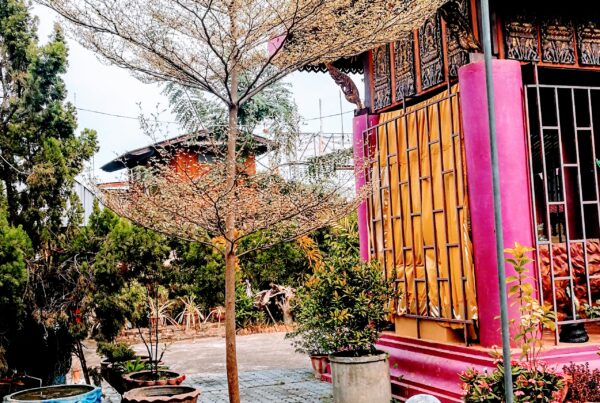
Northern Thai temple complexes are not separate from daily life. They sit beside markets, homes, schools and busy roads. Spiritual practice is woven into ordinary moments.
This is a profound lesson. Peace is not found when life becomes perfect, it is found when we stop missing the life we already have.
The morning walk.
A conversation with someone we love.
A quiet moment watching the rain.
The ego wants extraordinary experiences but the soul notices ordinary miracles.
In One Day One Life, we are gifted only one place to live:
Today.
Not yesterday or tomorrow.
The Bondi challenge:
You do not need a gathering of the magnificent masses to feel at peace.
Your personal temple can be:
- the walk from the train station
- making dinner with your family
- five silent minutes before opening emails
Presence is not another task it is remembering where you already are.
3. Compassion: — what’s the point of the beach body if no one knows the real you?
Perhaps the greatest teaching of Northern Thai Buddhism is loving kindness.
A meaningful life is not measured by what we achieve and who we are seen with, but by what we reduce:
Less harm.
Less fear.
Less judgement.
Less separation.
Western culture often asks:
“What did you become?”
Buddhist wisdom quietly asks:
“How did people feel in your presence?”
This sits deeply within One Day One Life. The propaganda of success convinces us that identity comes from external achievement, but the truth is simpler.
At the end of our lives, very few people will remember our job title or equity portfolio. I held my father’s hand as he passed away in front of us. Dad was a titan in SE Asia and a true business hero in Japan but that meant nothing in his hospital bed. Dad wanted loving family around him. As he went to the next life he will remember he was loved.
The Bondi challenge:
Before the Zoom meeting.
Before the difficult conversation.
Before reacting.
Pause and ask:
“Am I protecting my ego, or am I bringing kindness into this moment?”
A calmer person changes a room.
A compassionate human being changes a culture.
A leader sweeping the common room floor with a broom attracts more followers than a business class ticket and champagne glass pic in an Insta post.
The Final Lesson I received:
The mistake is believing peace belongs somewhere else. Northern Thai Buddhism teaches the opposite.
The journey and the destination are internal.
The sacred place is the moment we are standing in.
Bondi will always be busy.
Emails will keep arriving.
Traffic will keep moving.
People will keep chasing.
But we have a choice.
We can spend our lives running toward an imaginary finish line with our chia seed and mango smoothie or we can stop, breathe, look around and realise this is the only day we have ever been given.